Know It All about Removable Dentures: Types and Benefits
Removable dentures are a popular and cost-effective solution for patients who need to restore missing teeth. They provide both functional and aesthetic benefits, improving chewing ability and enhancing smiles. Keep reading to learn more about the benefits, types, and considerations when choosing the right removable dentures.
What are removable dentures?
Removable dentures are medical devices used to replace one or more missing teeth due to injury or disease in the upper jaw, lower jaw, or both. Dental technicians fabricate removable dentures from materials such as acrylic, resin, nylon, metal, and porcelain.
How Do Removable Dentures Work?
Full or partial removable dentures consist of a gum-colored resin base designed to fit snugly against the missing alveolar bone to provide support for the artificial teeth. The prosthetic teeth extending from the base are crafted to resemble and function like the patient’s natural teeth. Dentures are primarily held in place by the suction effect created when they fit securely against the alveolar ridge. This is why proper placement is crucial.
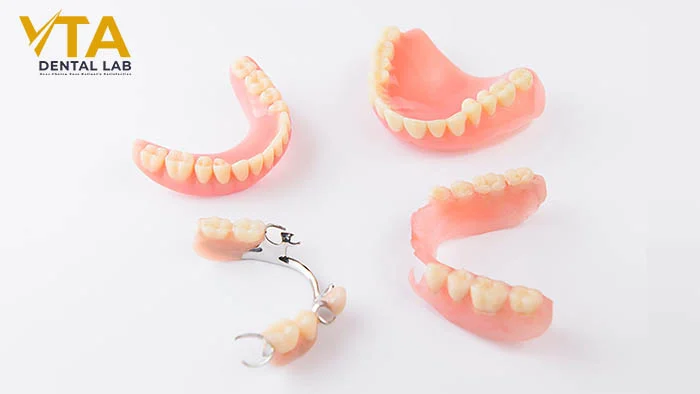
Removable dentures consist of a gum-colored resin base and prosthetic teeth
The large surface area of the palate provides additional support for upper dentures, making them highly stable during use.
Initially, patients may experience discomfort when eating and speaking, but over time, the muscles, nerves, and ligaments of the mouth adapt to the new function, allowing these activities to feel natural. Removable dentures also help support the facial skeleton and soft tissues of the lips and cheeks, contributing to a more youthful appearance.
Types of Full Dentures
Immediate Dentures: These serve as a temporary solution, allowing patients to adapt to wearing dentures successfully. Since the muscles need to adjust and the gums naturally shrink during healing, temporary dentures placed immediately after tooth extraction will not fit as precisely as permanent removable dentures made after full healing. However, they provide an instant replacement and allow time for adjustments before receiving the final dentures.
Conventional Full Dentures: Traditional removable dentures are designed with near-perfect precision. They are carefully crafted to resemble natural teeth, providing a realistic appearance and long-term functionality for patients.
Implant-Supported Overdentures: For enhanced stability of the upper and lower dentures, removable dentures can be anchored to the jawbone using dental implants. Many patients find this option to offer an excellent balance of aesthetics, functionality, and value.
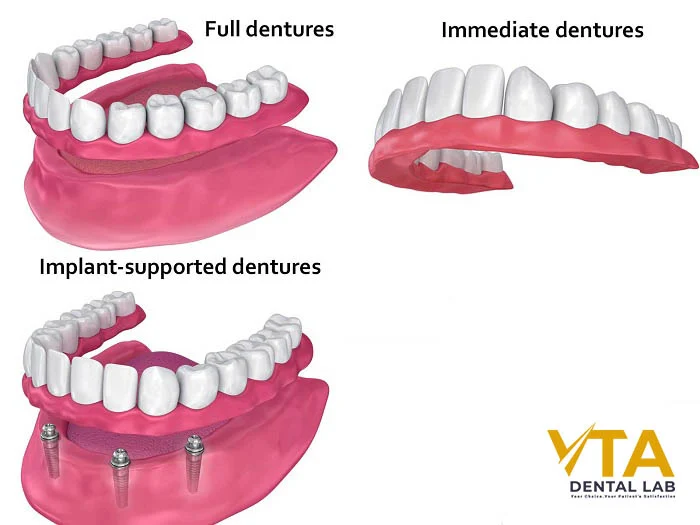
Types of full dentures
Types of Partial Dentures
Transitional Partial Dentures: These affordable temporary dentures help maintain space while the gums heal after tooth extraction. Once the healing process is complete, these dentures can be removed to proceed with permanent restorative options such as dental implants.
Removable Partial Dentures: Typically made from cast Vitallium, metal-based removable partial dentures are lightweight and provide greater comfort compared to acrylic dentures. While they are more expensive, they offer a superior fit and durability.
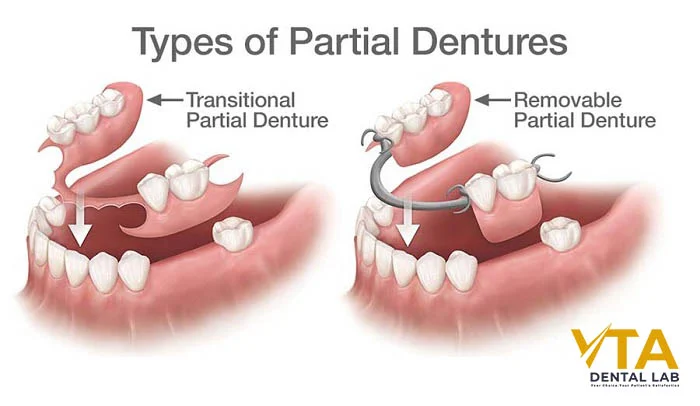
Types of Partial Dentures
How Dentures Are Made and Fitted
High-quality removable dentures are the result of a perfect blend of technology and skilled craftsmanship. The process begins with a dentist taking impressions of the upper and lower jaws, including the gums and any remaining teeth.
These impressions are then sent to a dental laboratory, where technicians use them to create a stone model. This model serves as the foundation for crafting customized dentures for the patient.
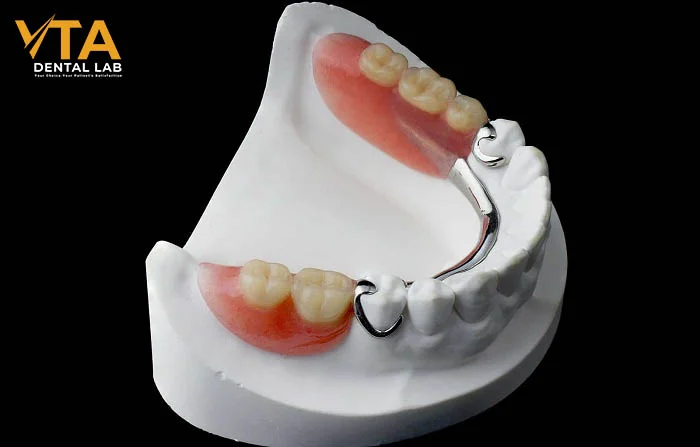
Removable dentures with natural tooth anatomy and a comfortable acrylic base
The initial denture framework is made using wax blocks, which help technicians determine the proper positioning of the artificial teeth. They then fabricate the dentures using materials such as acrylic, nylon, or resin. Finally, the artificial teeth are added, ensuring proper alignment between the upper and lower sets.
Once the dentures are fully crafted, technicians polish them to achieve a natural shine before sending them back to the dental clinic. The dentist then fits the final removable dentures for the patient.
Advantages of Removable Dentures
Removable dentures offer several benefits, including:
- Improved chewing and speaking function
- Enhanced aesthetics, restoring confidence
- A long-term solution that also improves speech clarity
Are There Alternatives to Dentures?
There are two primary alternatives to removable dentures: dental bridges and dental implants.
Dental Bridges
A dental bridge is an effective restorative option for patients with several healthy remaining teeth. It works best for those missing one to three consecutive teeth.
A bridge consists of crowns (abutments) placed on the natural teeth adjacent to the gap, with artificial teeth (pontics) filling the space in between to restore a complete smile.
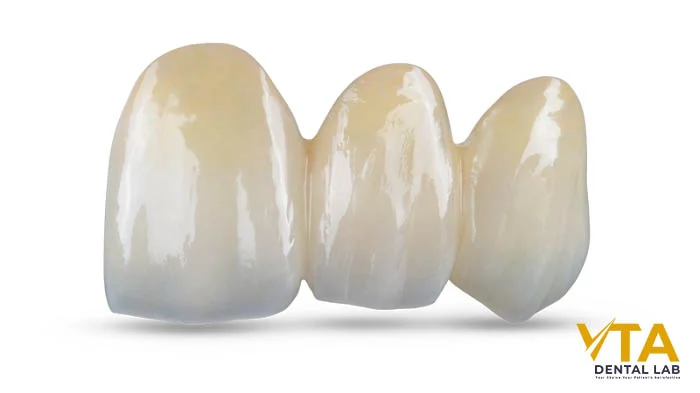
A dental bridge consisting of multiple connected crowns is designed to replace missing teeth and restore function
Dental Implants
Dental implants are the most popular alternative to removable dentures. They help stimulate the jawbone and prevent bone loss. While implant placement requires a longer healing period and tends to be more expensive than dentures, they can last a lifetime with proper care.
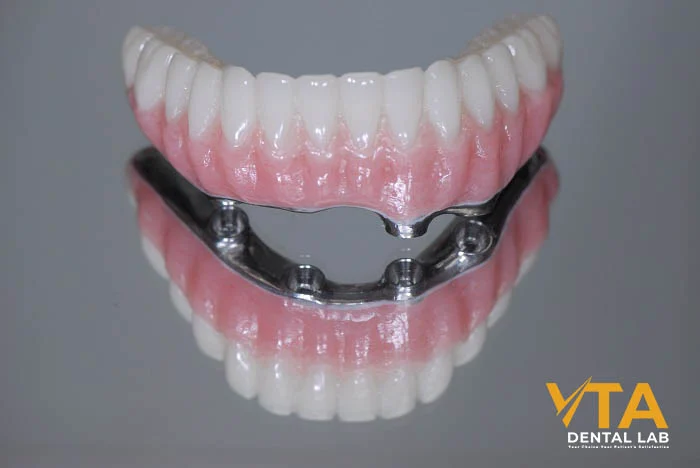
Dental implants are the most popular alternative to removable dentures
In Conclusion
Removable dentures are an effective and affordable solution for restoring both function and aesthetics to your smile. With advancements in dental technology, modern dentures now offer greater comfort, durability, and a natural appearance. At VTA Dental Lab, we are dedicated to delivering high-quality, custom-made removable dentures that enable dental clinics to provide the best possible care to their patients. Contact us today to learn more about our premium dental solutions and how we can support your practice!