Metal Retainers: Types, Indications, and Clinical Considerations
Metal retainers are a cornerstone in post-orthodontic care, helping maintain teeth alignment and preventing relapse. For dental professionals, understanding the nuances of different metal retainers – including their types, clinical indications, and maintenance – is crucial for delivering optimal outcomes. This article provides an in-depth, professional guide on metal retainers for dentists.
What is a Metal Retainer?
A metal retainer is an orthodontic appliance primarily made of stainless steel wire, sometimes combined with acrylic components, used to hold teeth in their corrected positions. Unlike clear plastic aligners, which are removable and transparent, or flexible retainers made entirely from thermoplastic materials, metal retainers offer superior durability and adjustability.
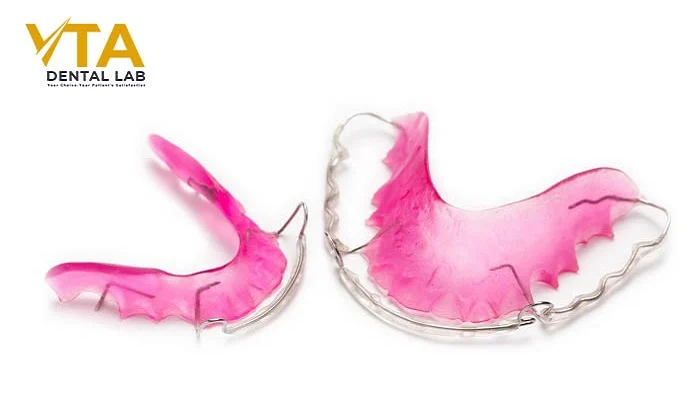
The main advantages of metal retainers include long-term effectiveness, resistance to breakage, and ease of modification by the orthodontist. They provide reliable stabilization, particularly in patients with high relapse potential. While esthetics may be slightly compromised compared to clear options, metal retainers remain the preferred choice in cases where clinical stability is the priority.
Types of Metal Retainers
Hawley Retainer
The Hawley retainer is a removable appliance featuring a stainless steel wire arch that passes across the front teeth, anchored to an acrylic plate molded to the palate or lingual surfaces. It maintains tooth position by exerting gentle pressure on specific teeth while allowing minor adjustments.
Advantages:
- Durable and adjustable
- Easy to repair if the wire bends
- Can accommodate minor tooth movements
Disadvantages:
- Palatal acrylic may slightly affect speech initially
- Less esthetic compared to clear options
Bonded (Fixed) Retainer
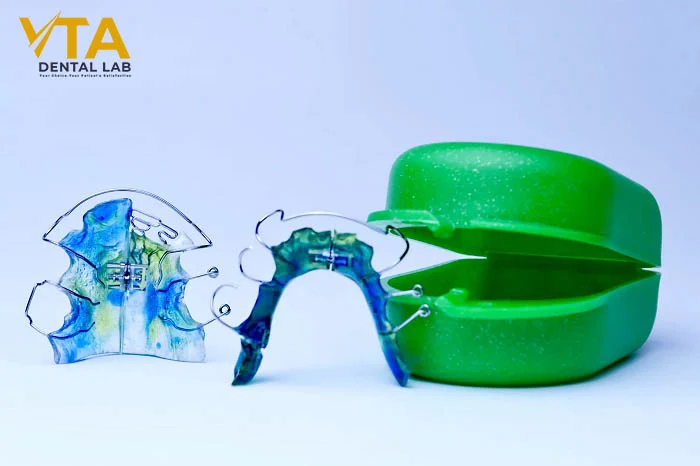
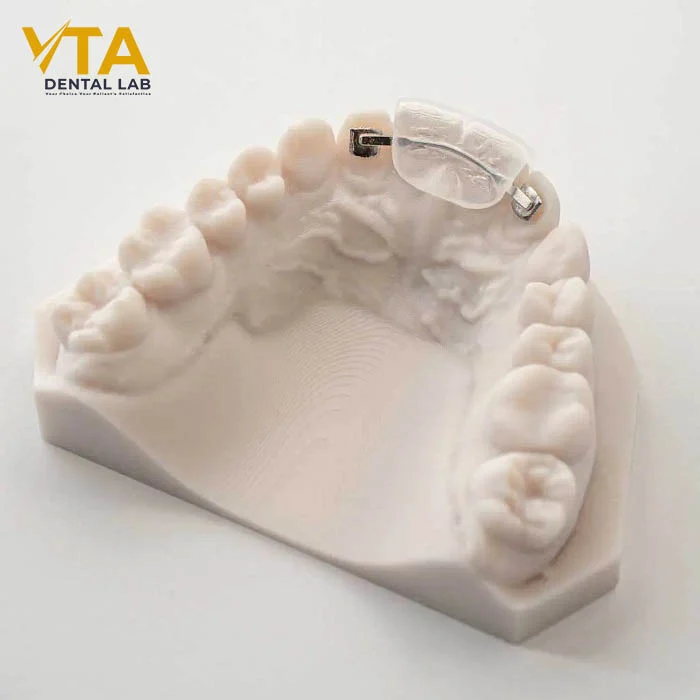
A bonded retainer involves a thin stainless steel wire permanently attached to the lingual surfaces of anterior teeth using dental composite. This type is ideal for patients with high relapse risk or those who may not comply reliably with removable retainers.
Placement & Care:
- Typically bonded to lower or upper incisors
- Requires meticulous hygiene; patients must floss carefully under the wire
- Regular monitoring is essential to prevent debonding
Advantages:
- Continuous stabilization without patient compliance
- Invisible from the front, preserving esthetics
Disadvantages:
- Difficult to clean compared to removable options
- Can debond if exposed to excessive force
Other Metal Retainers
Wraparound Retainer
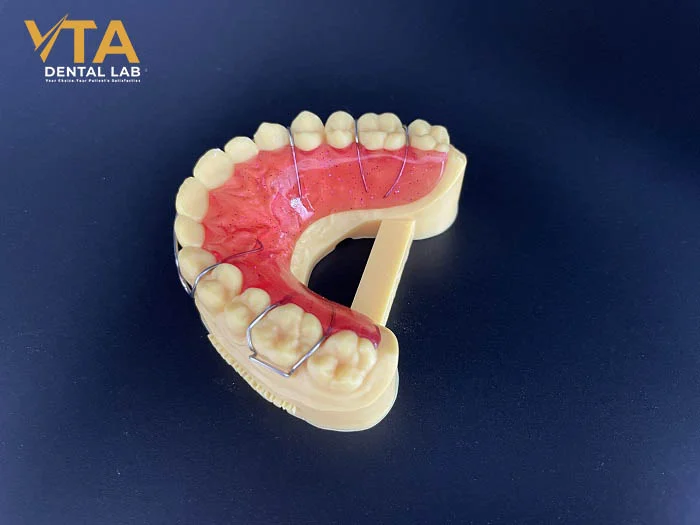
A wraparound retainer is a removable design similar to Hawley but with the wire extending around the posterior teeth, eliminating clasps on the molars. It is primarily indicated for patients who require full-arch stabilization or where posterior teeth need minimal interference from clasps.
Advantages:
- Maintains both anterior and posterior teeth alignment
- Comfortable and easy to insert or remove
Disadvantages:
- Wire can deform if not handled carefully
- Less esthetic than bonded alternatives
Modified / Combination Retainers
In complex cases, orthodontists may use modified or combination metal retainers, such as a Hawley with added lingual wire or a bonded retainer with auxiliary springs. These are tailored for specific clinical scenarios, like patients with rotated teeth or those prone to bruxism.
Clinical Indications for Metal Retainers
Choosing the appropriate metal retainer depends on patient age, oral habits, tooth type, and relapse risk.
- Hawley Retainers are preferred for patients who require minor tooth adjustments post-treatment, especially when anterior esthetics and speech comfort are considerations.
- Bonded Retainers are ideal for patients with a history of relapse, high-risk anterior crowding, or poor compliance with removable appliances. They are particularly effective for mandibular anterior teeth.
- Wraparound Retainers suit patients needing full-arch stability without clasps on molars, ensuring posterior teeth remain aligned while maintaining patient comfort.
Other considerations:
- Patients with bruxism may benefit from modified retainers that incorporate reinforcement wires
- Younger patients with good compliance may do well with removable Hawley or wraparound retainers
- Oral hygiene habits must be assessed to determine if fixed retainers are suitable
Maintenance and Patient Instructions
Proper maintenance is critical for metal retainers to ensure effectiveness and longevity:
- Hygiene: Brush the retainer daily using a soft toothbrush and mild toothpaste. Avoid hot water, which can distort acrylic components.
- Handling: Removable retainers should be inserted and removed gently to prevent wire deformation. Store in a protective case when not in use.
- Regular Checkups: Patients with bonded retainers should have routine evaluations to check for debonding or plaque accumulation.
- Repair & Adjustment: If a Hawley wire bends or acrylic cracks, it should be adjusted or repaired promptly. Bonded wires that loosen must be rebonded by a dental professional.
- Esthetics: Metal retainers are highly durable but may affect esthetic appearance slightly; ensure patients understand the trade-offs.
Common Complications and Troubleshooting
Metal retainers, while reliable, may encounter issues:
- Hawley Retainers: Wire may bend, acrylic may crack; minor repairs can usually restore function.
- Bonded Retainers: Wire may debond, especially under trauma or improper flossing; careful cleaning is necessary to avoid plaque buildup.
- Wraparound Retainers: Wire can deform if dropped or handled roughly; patients should be instructed on safe handling.
Conclusion
Metal retainers, particularly Hawley and bonded retainers, are essential for post-orthodontic stability. Choosing the appropriate type requires consideration of patient compliance, occlusion, esthetic needs, and oral hygiene. Proper maintenance, patient education, and periodic monitoring are crucial for long-term success.
For high-quality, custom-fabricated metal retainers tailored to clinical requirements, partnering with a trusted dental laboratory such as VTA Dental Lab ensures optimal retention and patient satisfaction.