All-inclusive about Removable Partial Dentures
Removable partial dentures (RPD) are a popular and effective solution for individuals who have lost some but not all of their natural teeth. These dental appliances are designed to restore both function and aesthetics, helping patients regain their ability to chew, speak, and smile with confidence.
In this article, we will explore the benefits, types, and materials used in removable partial dentures, so you can make an informed decision about restoring your smile
What are removable partial dentures?
Removable Partial Dentures (RPD) are medical devices designed to replace one or more missing teeth due to cavities or disease. They help restore a natural appearance, improve speech clarity, and enhance chewing function.
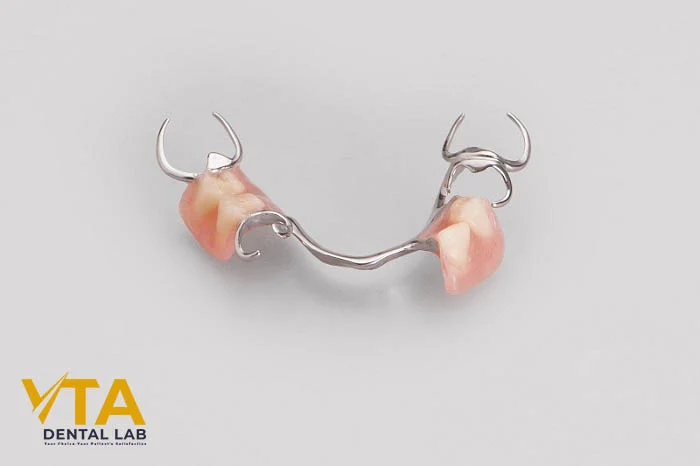
Partial dentures can be made from a combination of metal and acrylic materials or entirely from acrylic. RPDs are custom-made to fit the patient’s mouth and are designed for easy removal, allowing for simple cleaning and maintenance.
Components of a Removable Partial Denture
A removable partial denture consists of several key components that work together to restore function, aesthetics, and comfort for the patient.
Main Connector
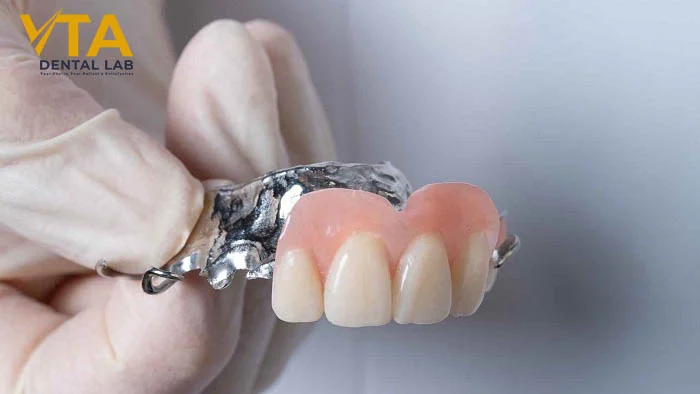
The main connector unit of a removable partial denture connects the components of one side of the dental arch to those on the other side.
The function of the Main Connector
The main connector functions to unite all other parts of the partial denture so that they work as a single unit. In doing so, this component distributes functional loads across all the abutment teeth, preventing any single abutment from bearing excessive load. This also helps distribute pressure between the teeth and the mucosal tissues.
Minor Connectors
A minor connector in a partial denture is a component that links other parts, such as the direct retainer, indirect retainer, denture base, and more, to the major connector.
Functions of Minor Connectors
- Provide Unification and Rigidity: Minor connectors contribute to the overall structural integrity of the partial denture by ensuring all components work together cohesively.
- Provide Stress Distribution: They transfer stresses from the major connector to other parts of the denture and from the denture to the abutment teeth, ensuring an even distribution of functional loads.
- Act as Bracing Elements: Minor connectors help maintain stability through contact with guiding planes that oppose the retentive arms, preventing excessive movement of the denture.
- Maintain a Path of Insertion: They assist in keeping the path of insertion correct by maintaining contact with guiding planes.
Requirements When Fabricating the Main Connector
Rigidity is critical to ensuring that the removable partial denture functions as a cohesive unit. If the denture bends, the distribution of forces and the stability of the arch can be compromised, as different parts of the denture may move independently. Harder alloys, such as chrome-cobalt or gold alloys, can reinforce the main connector.
Another consideration is that the edges of the main connector should transition smoothly from the connector to the tissue to minimize discomfort. All corners and edges should be rounded and smooth. The gingival contour should not be placed in areas that could affect speech. The thickness of the connector should be minimized to avoid interfering with speech or aesthetics, while still ensuring adequate strength to maintain durability.
Classification of Removable Partial Dentures
Currently, removable partial dentures are classified into four basic types:
Type 1
The edentulous spaces are located on both sides of the arch, posterior to the remaining natural teeth. This represents a bilateral distal-extension case, where the denture base must extend backward on both sides for support and stability.
Type 2
The edentulous area is on one side only and is located behind all remaining teeth. This is a unilateral distal-extension situation where the denture base extends posteriorly on a single side.
Type 3
The edentulous space is on one side of the arch and is bordered by natural teeth both anteriorly and posteriorly. This is a bounded edentulous area that typically provides better support and stability.
Type 4
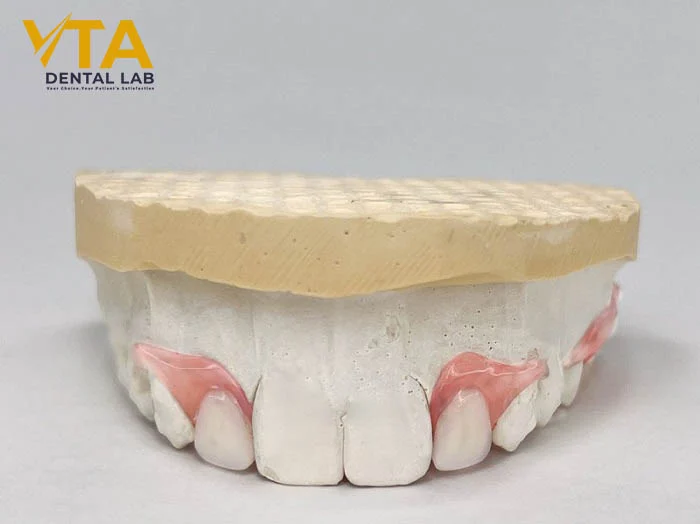
The edentulous area is unilateral but crosses the midline and is located anterior to the remaining teeth. This classification involves an anterior space that requires careful design for esthetics and structural support.
Common Materials Used in the Manufacture of Removable Partial Dentures
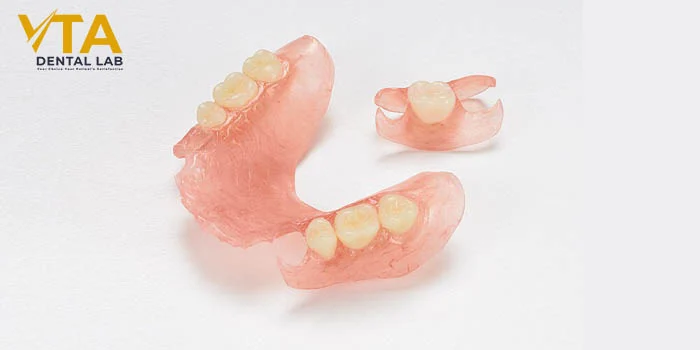
Acrylic Resin
Acrylic resin is the most commonly used material for partial dentures today, offering an excellent balance between durability, aesthetics, and affordability. Made from rigid plastic, acrylic dentures appear natural once fabricated. However, the downside of acrylic material is that it is not as durable as porcelain, typically lasting around five to seven years.
Porcelain
Porcelain partial dentures are highly regarded for their aesthetics and durability. They can last more than 10 years if properly maintained. Porcelain dentures allow patients to consume foods of a certain hardness without affecting the dentures.
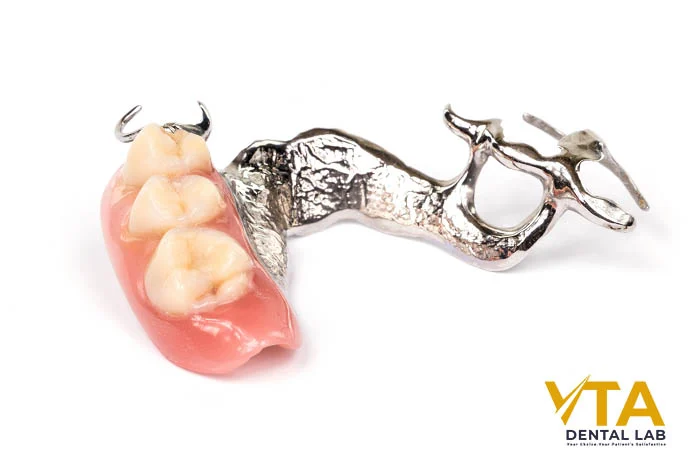
Cast Metal Partial Dentures
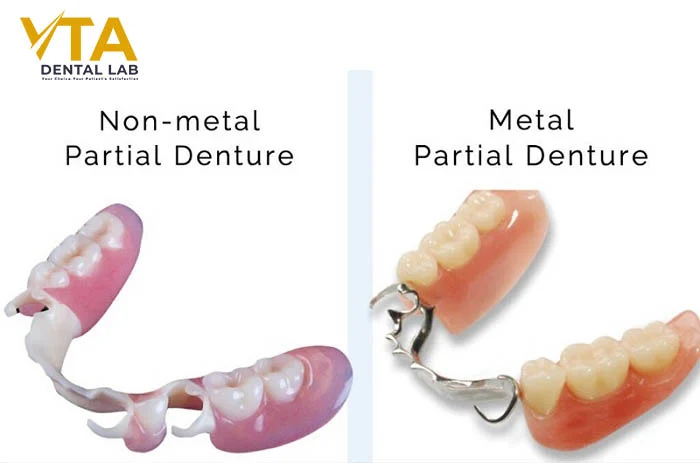
Metal partial dentures are designed with an acrylic resin base and a metal frame to enhance stability and extend the lifespan of the dentures. Some patients initially worry about the appearance of metal dentures, but these can be made in a shade that matches the gums and has minimal impact on aesthetics. This type of denture is ideal for patients seeking a secure and comfortable fit for daily speaking and eating.
Flexible Partial Dentures
Flexible partial dentures are an alternative to metal-cast dentures, made from a flexible plastic frame instead of metal, offering improved aesthetics. However, flexible partial dentures are not as durable as metal-cast dentures, which is why they are less popular.
Takeaway
Removable partial dentures are an effective solution for replacing missing teeth, helping restore chewing function and improve aesthetics at an affordable cost. VTA Dental Lab is the ideal choice if you’re looking for a reliable dental lab to craft high-quality RPDs.
We provide precise, durable products that help dentists achieve the best results for their patients. Contact VTA Dental Lab today for a quote and detailed consultation!